
Build · Investor readiness
What investors check in your financial model in the first ten minutes
Analysts don't read your model top to bottom. They run a short sequence of checks, and the first failure colours everything after it. Here's that sequence, with the numbers they look for.
By The Financial Mastery Team · Updated October 26, 2026 · 4 min read
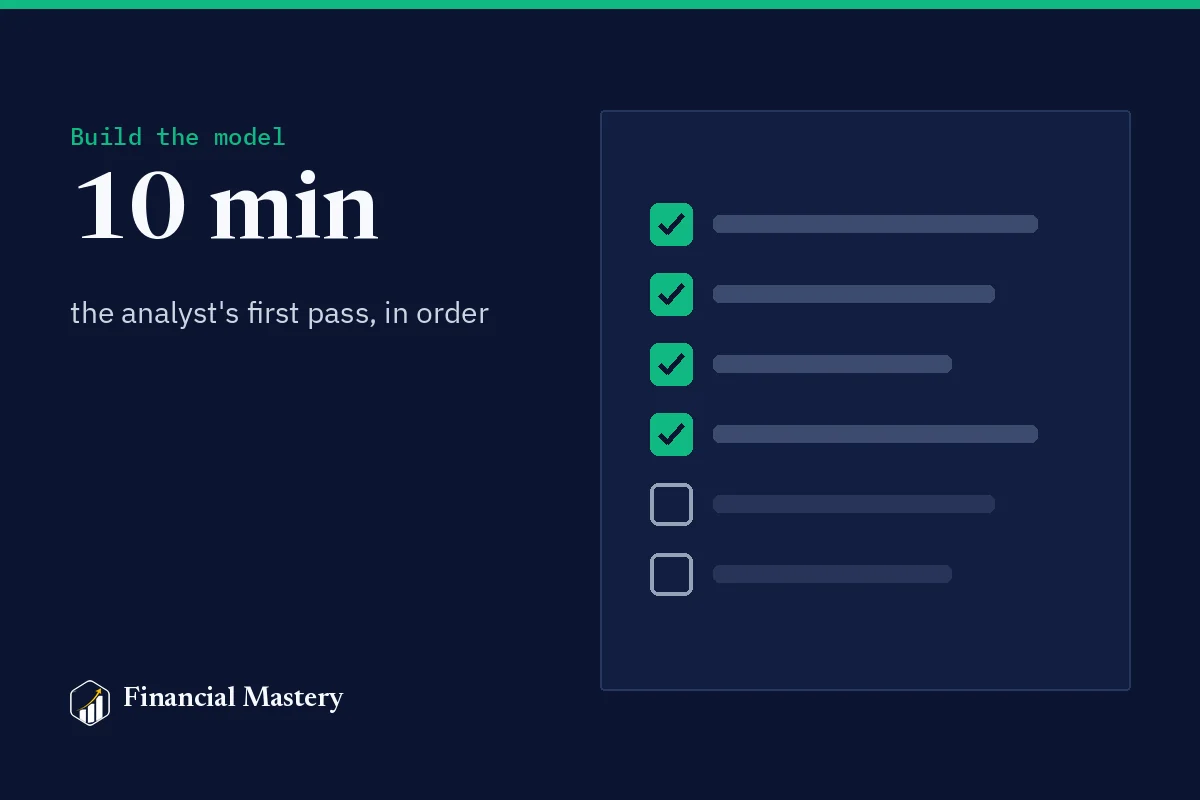
You send the model on Tuesday. On Wednesday an associate at the fund opens it, and within ten minutes has decided whether it's worth an hour. They aren't reading it the way you built it. They're testing it.
What follows is the order most analysts work in. It isn't a secret; it's just rarely written down. Pass these and your model gets read. Fail an early one and every number after it is assumed to be wrong.
The quick answer
Investors check, in order: that the model holds together (no errors, a balance sheet that balances, cash that ties out), that your starting numbers match reality, that revenue is built from real drivers, that costs follow a credible hiring plan, and that the round size and runway come from the model rather than a guess. Unit economics and the cap table get a close look after that.
Minute 1–2: Does it hold together?
The first things an analyst looks for are mechanical, because they're fast and they're telling:
- Errors. Any
#REF!or#DIV/0!and they stop. It says nobody checked. - The balance sheet balances, every month, not just year-end.
- Cash on the cash flow statement equals cash on the balance sheet.
- Hard-coded numbers where formulas should be. A typed-over cell in a revenue row is the most common way a model quietly breaks.
Why this matters more than it seems
If the integrity checks fail, the analyst can't tell which of your other numbers are real. It's not that they think you're dishonest; it's that they can't trust anything the model computes. A model that doesn't balance is usually read as a founder who doesn't yet understand their own cash.
If yours doesn't balance, the usual causes are covered in our financial model fixes.
Minute 3–4: Does month 1 match today?
Next they compare your first forecast month with what they already know from your deck and your data room:
- Opening cash matches your bank balance.
- Month 1 revenue is close to your actual current revenue.
- Customer count and price match your billing system, after discounts.
A model that starts above reality has a credibility problem before the forecast even begins. Start exactly where you are; growth is more impressive from an honest base.
Minute 5–6: Is revenue built, or drawn?
Investors look for a mechanism, not a curve. A revenue line that grows 15% a month because someone typed 15% tells them nothing. A revenue line built from marketing spend ÷ CAC, plus organic growth, minus churn tells them how the business works and lets them change one input to test it.
They'll then sanity-check the output:
- Does month-on-month growth stay above 15–20% for years? That rarely happens.
- Is ARR built from recurring revenue only, not one-off setup fees?
- Is the customer count in year 3 plausible against your market?
Ranges for growth, churn and margin differ a lot by business model. Our benchmarks by business model list what's typical for SaaS, marketplaces, e-commerce and four more.
Minute 7–8: Unit economics
This is where a good model starts to earn its keep. The analyst wants three numbers, and wants to see where each comes from:
- LTV (lifetime value): gross profit per customer over their lifetime.
- CAC (customer acquisition cost): what it costs to win one customer.
- Payback: months of gross profit to earn back the CAC.
Worked example: a customer pays $400 a month at an 80% gross margin, and 3% of customers leave each month. LTV = $400 × 80% ÷ 3% ≈ $10,700. The company spent $24,000 to win 12 customers, so CAC is $2,000. That's an LTV : CAC of about 5.3x and a 6-month payback, comfortably healthy.
Try it with your own numbers
LTV : CAC and Payback Calculator
The common mistakes here are using revenue instead of gross profit for LTV, leaving salaries out of CAC, and assuming churn will fall faster than you can explain.
Minute 9: Costs and the team
The cost plan is where investors see your priorities. They check that every person is on the headcount plan with a start month, that salaries match the market where you hire, and that sales hires start before the revenue they're meant to drive, with a ramp. Revenue per employee should rise over time; if it falls, the plan is hiring ahead of any evidence.
Minute 10: Is the ask justified by the model?
Finally, the raise. Does cash stay positive in the base case? Does the round buy 18 to 24 months? Do the use-of-funds percentages match what the model spends? And do you know your cash-out date if things go worse than plan?
That last one separates founders who've modelled from founders who've forecast. Read how much should a startup raise for the full calculation.
The full list
These ten minutes cover the checks that decide whether your model gets read. The complete list, 68 checks in 7 areas from integrity to presentation, is in our free investor-ready financial model checklist. It saves your progress in your browser, so you can work through it over a few evenings.
And when the model is ready, the questions start. Our list of 50 questions investors ask covers what they're really testing with each.
In the kit · Financial Mastery Lite · $99
Start from a model that already checks itself
The Lite kit's 3-statement model has a Checks tab that confirms the balance sheet balances and cash ties out in every one of 60 months, a Model Health Score that flags assumptions outside benchmark ranges, and a unit economics dashboard investors recognise.
11 files, 4 PDF books. Works in Excel, Google Sheets and LibreOffice. The kit page shows the full contents and the first 12 pages of its Launch Plan.

Prefer to start free? Open the calculator or find the kit that fits.
Keep reading
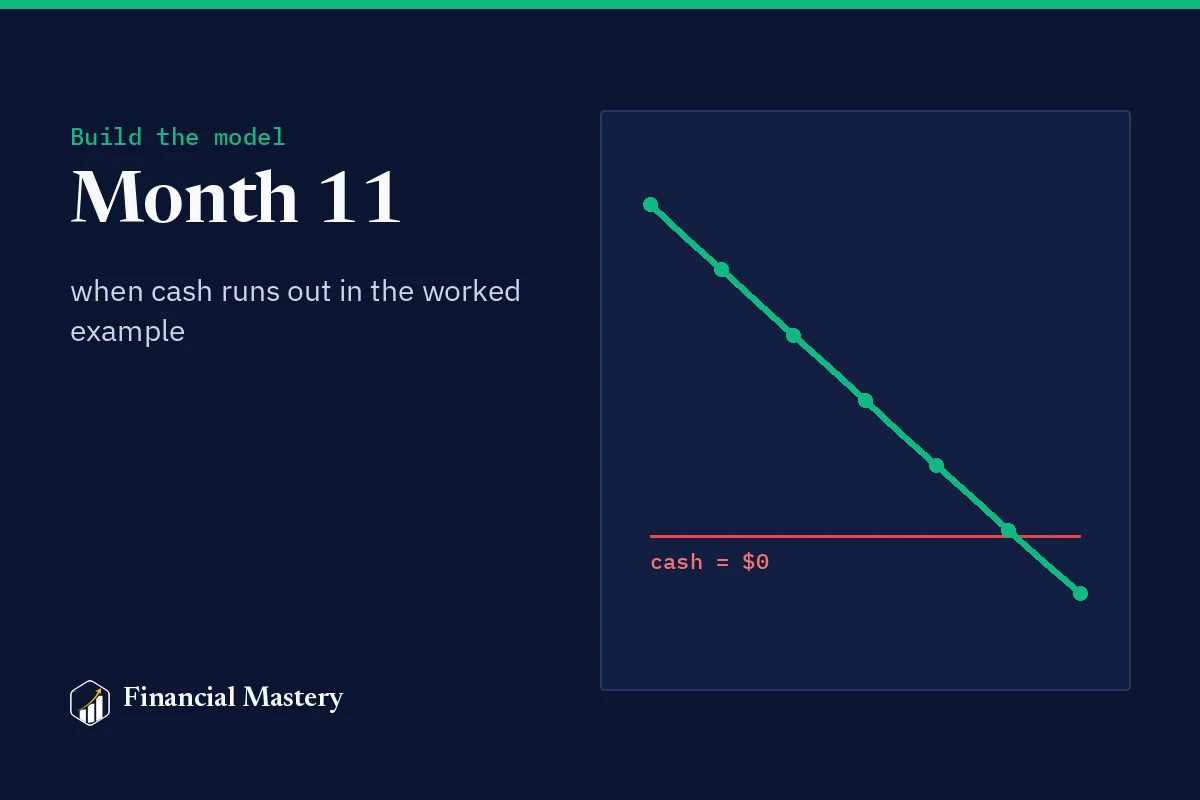
Build the model · 5 min
How much runway a startup needs, and when to start raising
Cash divided by burn gives you a number. It's not your runway. Here's how to work out the month cash really runs out, whether you're default alive, and the date you have to start raising.
January 19, 2026
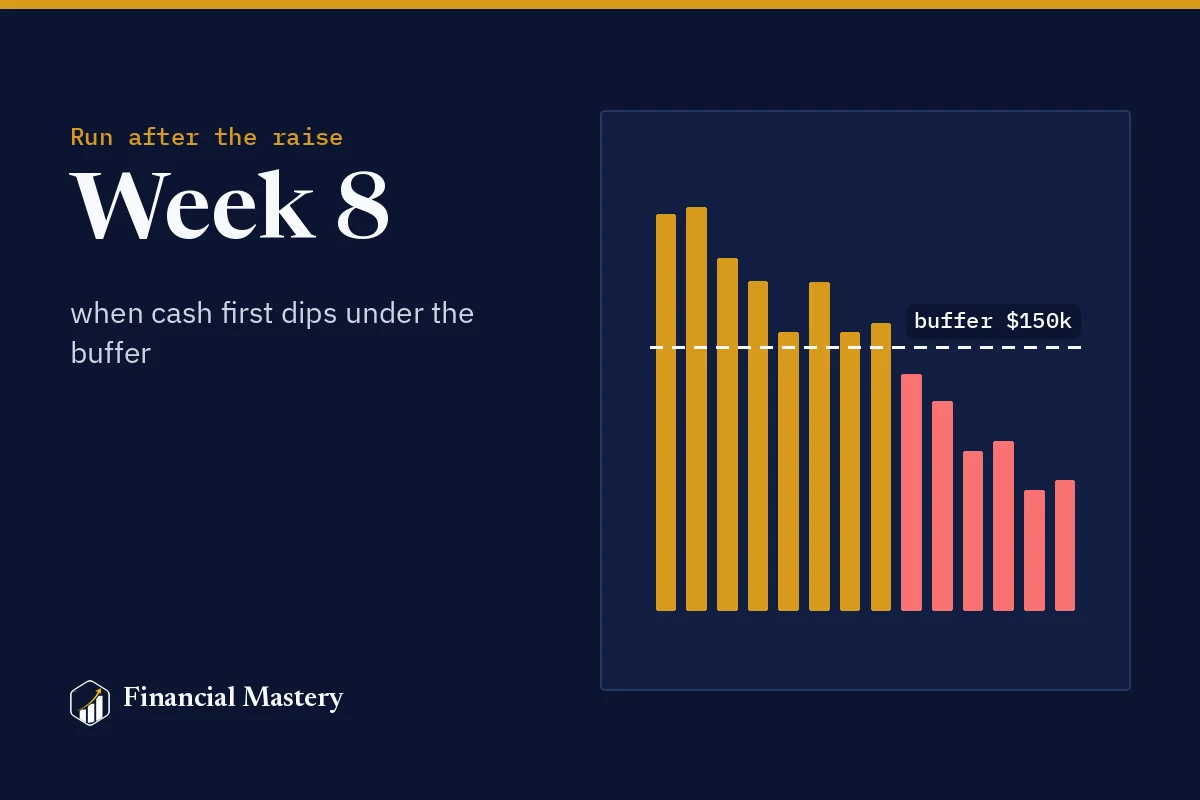
Run the company · 5 min
How to build a 13-week cash flow forecast and use it every Monday
Monthly forecasts hide the week your payroll and a tax bill land together. A 13-week cash flow shows it. How to build one, how to roll it every Monday, and how one company found its problem week before it arrived.
July 6, 2026
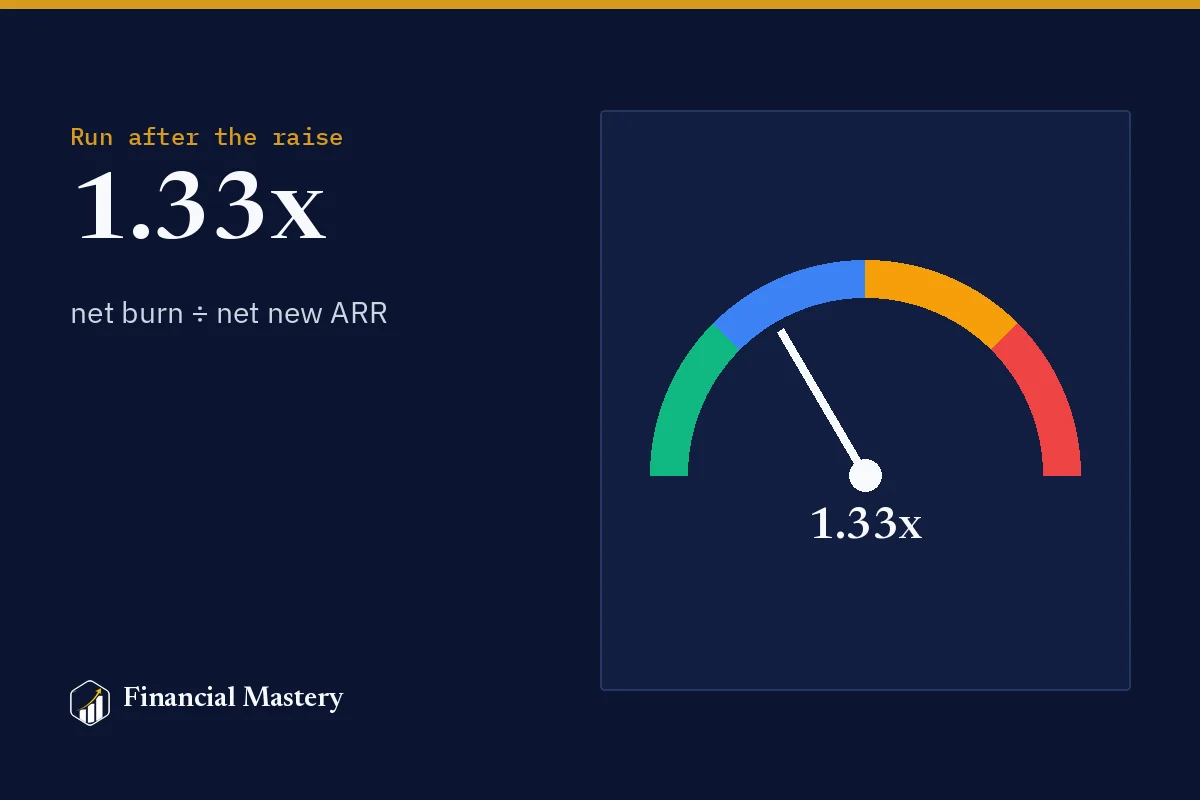
Run the company · 3 min
Burn multiple is the ratio your next investor will calculate
Net burn divided by net new ARR. Simple to calculate, hard to fake, and the quickest read on whether your growth is worth what it costs. With worked examples, the usual ranges and what moves it.
May 18, 2026